
Reviewed by Dr. Mukesh Ravala, MRCGP CCT · UK GP
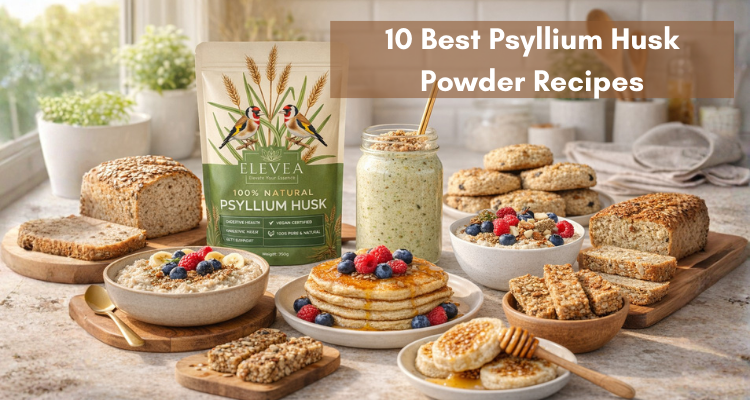
What if boosting your daily fibre intake was as simple as adding one ingredient to the meals you already enjoy? Many people struggle to get enough fibre in their everyday diet, even though it plays an important role in digestion and overall health. One easy way to increase fibre intake is by using psyllium husk, a natural ingredient known for its high soluble fibre content.
It blends easily into smoothies, breakfasts, baked goods, and quick snacks without complicated preparation. That’s why many people are turning to simple, everyday psyllium husk powder recipes to make their meals more filling and nutritious. In this blog, you’ll find practical ideas, including easy psyllium husk powder recipes you can try at home. Keep reading to discover 10 fibre-rich recipe ideas.
What Is Psyllium Husk Powder?
Psyllium husk powder comes from the outer coating of seeds from the Plantago ovata plant. After harvesting, the husks are separated, cleaned, and ground into a fine powder that can easily be mixed into food and drinks. It is widely used as a natural fibre supplement because it contains a high amount of soluble fibre. When mixed with liquid, it forms a soft gel-like texture, which is why it works well in porridges, smoothies, and baking. Many people include it in everyday meals or simple psyllium husk powder recipes to increase fibre intake. You’ll often see recipes using psyllium husk powder in healthy breakfasts, baked goods, and snack ideas that aim to support better digestion.
Why Add Psyllium Husk Powder to Your Recipes?
Adding psyllium husk powder to everyday meals is a simple way to increase fibre intake without making big changes to your diet. It is well known for supporting digestive health and helping maintain regular bowel movements because of its high soluble fibre content. When mixed with liquids, psyllium forms a soft gel that can also improve texture and structure in baking, especially in breads or pancakes. This makes many recipes with psyllium husk powder easier to prepare while giving foods a better consistency. Another advantage is that fibre-rich meals tend to feel more filling and satisfying. That’s why many people include psyllium husk recipes in smoothies, breakfast bowls, breads, and snacks. You’ll also find many creative recipes for psyllium husk powder that fit easily into everyday meals.
10 Must-Try Recipes with Psyllium Husk Powder
These psyllium husk powder recipes offer simple, tasty ways to add fibre to breakfasts, snacks, and baked meals every day.
1. Psyllium Husk Porridge (Fibre-Boosted Oat Porridge)
Porridge is a classic breakfast enjoyed across the UK, especially during colder months. Adding psyllium husk powder thickens the oats naturally while boosting fibre content without changing the comforting taste. The result is a creamy, satisfying bowl that keeps you fuller for longer. Combined with berries and a touch of honey, this porridge becomes a nutritious start to the day while still feeling like a familiar and comforting breakfast.
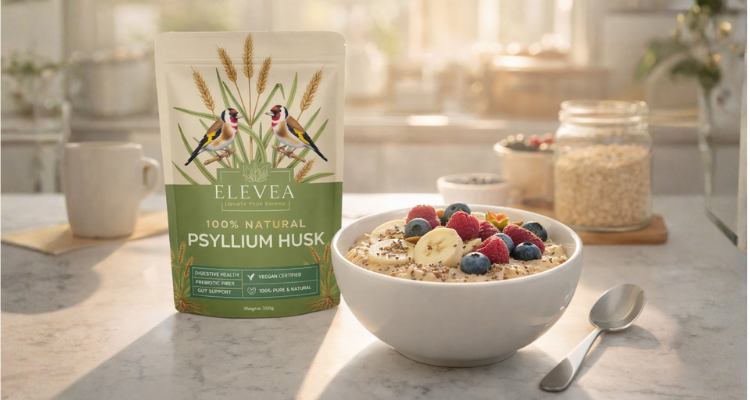
Ingredients (1 serving)
- ½ cup rolled oats
- 1 tsp psyllium husk powder
- 1 cup milk or plant milk
- 1 tsp honey or maple syrup
- Handful of berries
Method
- Add oats and milk to a saucepan and heat gently.
- Stir occasionally until the oats begin to soften.
- Add psyllium husk powder and mix well.
- Cook for another 2–3 minutes until thickened.
- Transfer to a bowl and top with berries and honey.
2. Psyllium Husk Flapjacks
Flapjacks are a well-known British oat tray bake commonly found in cafés, bakeries, and lunchboxes. Adding psyllium husk powder helps bind the oats while increasing the fibre content of this sweet snack. The result is a chewy, satisfying bar with a slightly thicker texture. These flapjacks are easy to prepare in one tray and make a convenient snack for busy days or afternoon tea.
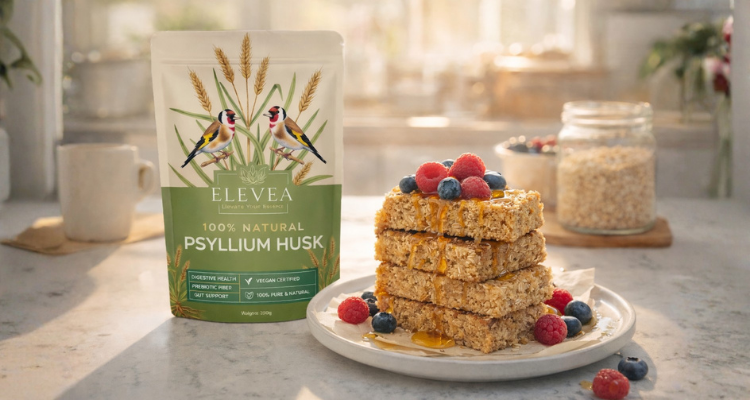
Ingredients (makes 8–10 pieces)
- 2 cups rolled oats
- 2 tsp psyllium husk powder
- 100 g butter
- 3 tbsp golden syrup
- 3 tbsp brown sugar
Method
- Preheat oven to 180°C and line a baking tray.
- Melt butter, golden syrup, and brown sugar in a saucepan.
- Stir in oats and psyllium powder.
- Mix until evenly coated.
- Press mixture into the tray and bake 15–20 minutes.
- Cool before slicing.
3. Psyllium Husk Wholemeal Bread
Bread is a staple in many households, and psyllium husk powder can improve the texture and structure of fibre-rich loaves. It helps hold the dough together and creates a softer crumb, especially in wholemeal or gluten-free baking. This simple loaf works well for sandwiches or toast and is an easy way to include extra fibre in everyday meals without changing familiar bread recipes.
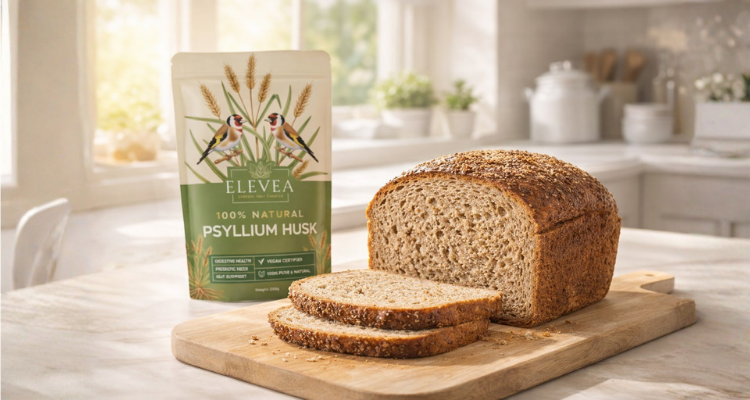
Ingredients
- 2 cups wholemeal flour
- 2 tbsp psyllium husk powder
- 1 tsp yeast
- 1 tsp salt
- 1½ cups warm water
- 1 tbsp olive oil
Method
- Mix flour, psyllium powder, yeast, and salt in a bowl.
- Add warm water and olive oil.
- Stir until a soft dough forms.
- Cover and allow to rise 1 hour.
- Transfer to a loaf tin.
- Bake at 200°C for 35–40 minutes.
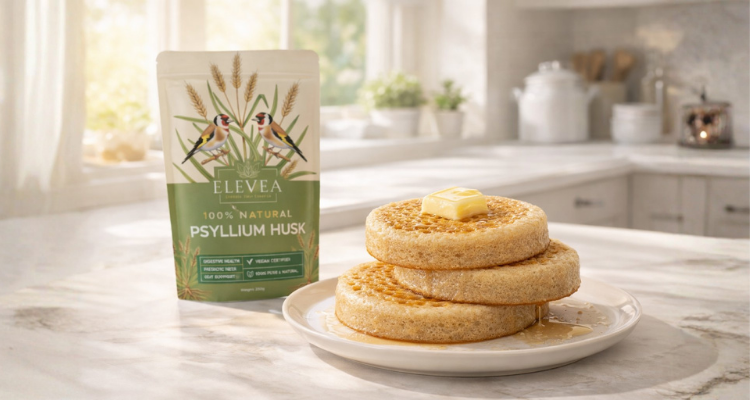
4. Psyllium Husk Crumpets
Crumpets are a well-loved breakfast or teatime food in the UK, known for their soft texture and small holes that hold melted butter. Psyllium husk helps give the batter structure and a slightly thicker consistency while maintaining the soft interior. These homemade crumpets cook quickly in a pan and can be served warm with butter, honey, or jam.
Ingredients
- 1 cup plain flour
- 1 tbsp psyllium husk powder
- 1 tsp yeast
- 1 cup warm milk or water
- ½ tsp baking soda
- ½ tsp salt
Method
- Mix flour, psyllium powder, yeast, and salt.
- Add warm milk and whisk into a smooth batter.
- Leave to rest for 30–40 minutes.
- Stir in baking soda.
- Cook in greased crumpet rings for 4–5 minutes each side.
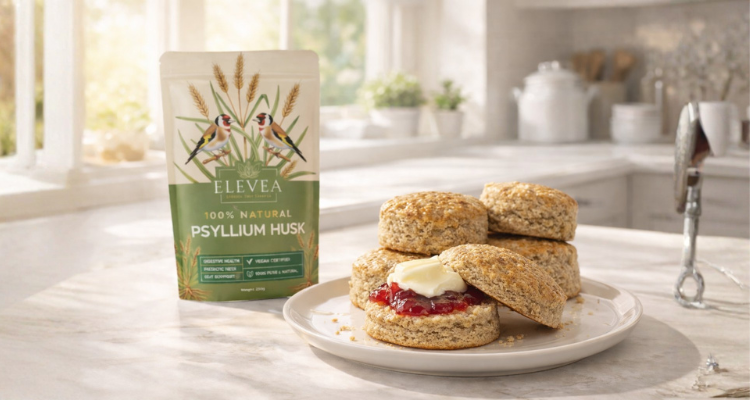
5. Psyllium Husk Scones
Scones are a traditional British baked treat often served with tea, jam, and cream. Adding psyllium husk powder introduces extra fibre and helps bind the dough without affecting the familiar texture. These scones remain light and crumbly while providing a slightly heartier bite. They are simple to bake at home and work well as a breakfast pastry or afternoon snack.
Ingredients
- 2 cups flour or almond flour
- 1 tbsp psyllium husk powder
- 2 tsp baking powder
- 50 g butter
- ¾ cup milk
Method
- Preheat the oven to 200°C.
- Mix flour, psyllium powder, and baking powder.
- Rub in butter until crumbly.
- Add milk and mix into dough.
- Shape and cut into rounds.
- Bake for 12–15 minutes until golden.
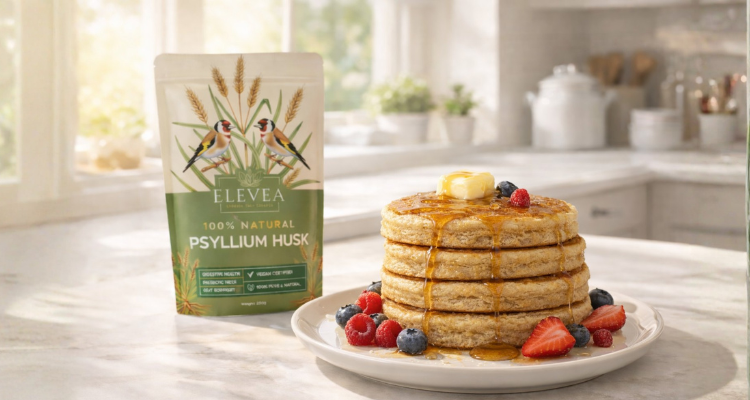
6. Psyllium Husk Pancakes
Pancakes are enjoyed across the UK, especially during breakfast or Pancake Day celebrations. Psyllium husk powder adds fibre and helps create a thicker batter, producing fluffy pancakes that hold their shape well. These pancakes cook quickly and pair nicely with fruit, syrup, or Yoghurt. They offer a simple way to make a classic breakfast more filling and nutritious.
Ingredients
- 2 eggs
- ½ cup flour or oat flour
- 1 tbsp psyllium husk powder
- ½ cup milk
- 1 tsp baking powder
Method
- Whisk eggs and milk together.
- Add flour, psyllium powder, and baking powder.
- Mix until smooth batter forms.
- Heat a non-stick pan with butter.
- Pour small rounds and cook 2–3 minutes per side.
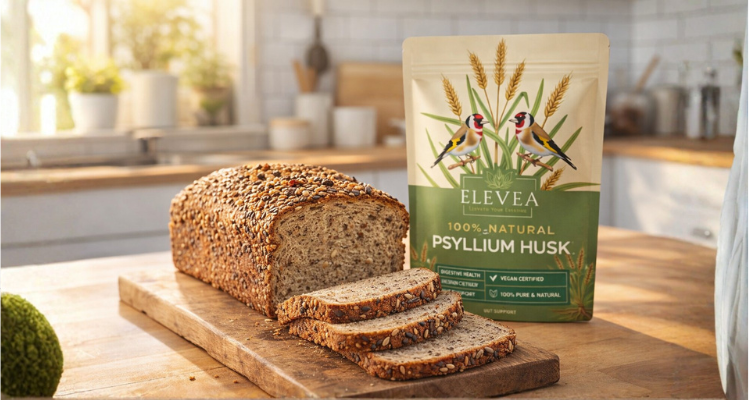
7. Psyllium Seeded Bread Loaf
Seeded loaves are very popular in bakeries and supermarkets, known for their nutty flavour and crunchy texture. Psyllium husk helps bind the seeds and oats together, creating a sliceable loaf without needing large amounts of flour. The result is a dense but satisfying bread that toasts beautifully and works well for sandwiches or breakfast toast.
Ingredients
- 1½ cups mixed seeds (sunflower, pumpkin, flax)
- ½ cup oats
- 2 tbsp psyllium husk powder
- 1 tbsp honey
- 2 tbsp olive oil
- 1½ cups water
Method
- Combine all dry ingredients in a bowl.
- Add honey, oil, and water.
- Stir until mixture thickens.
- Pour into a lined loaf tin.
- Rest 30 minutes.
- Bake at 180°C for 45 minutes.
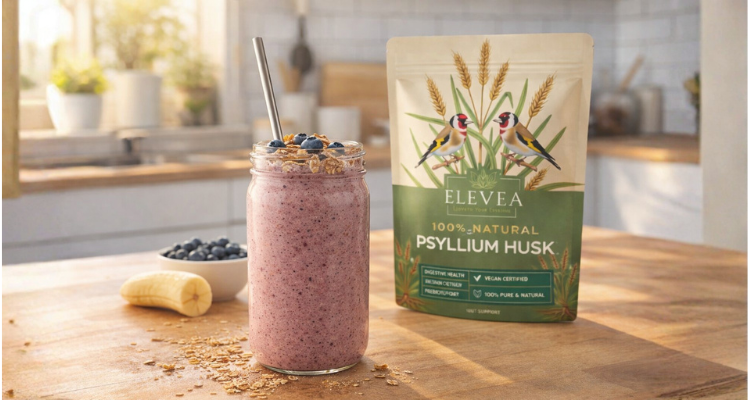
8. Psyllium Husk Breakfast Smoothie
Smoothies are a popular quick breakfast or post-workout drink in many cafés and homes. Psyllium husk powder thickens the drink naturally and increases fibre without changing the fruity flavour. Blended with banana, berries, and milk, this smoothie becomes creamy and filling. It’s one of the easiest ways to include psyllium husk in a daily diet without cooking.
Ingredients
- 1 banana
- 1 tsp psyllium husk powder
- 1 cup almond milk
- 1 tbsp peanut butter
- Handful of berries
Method
- Add all ingredients to a blender.
- Blend until smooth.
- Leave for 1–2 minutes to thicken slightly.
- Blend again briefly.
- Pour into a glass and serve.
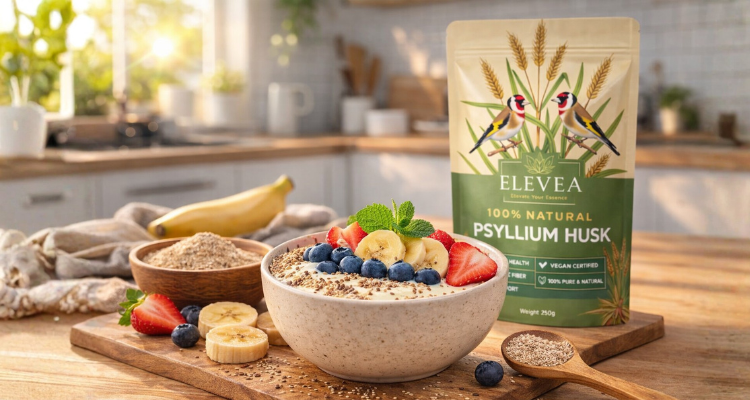
9. Psyllium Husk Yoghurt Bowl
Yoghurt bowls are a simple and nutritious breakfast option often served with fruit and granola. Mixing psyllium husk powder into Yoghurt thickens the texture and adds fibre without affecting the flavour. This bowl is quick to assemble and can easily be customised with nuts, seeds, or seasonal fruit for variety.
Ingredients (1 serving)
- 150 g Greek Yoghurt or skyr
- 1 tsp psyllium husk powder
- 1 tsp honey
- Handful of berries
- 1 tbsp nuts or seeds
Method
- Stir psyllium powder into Yoghurt.
- Leave 3 minutes to thicken.
- Add berries and nuts.
- Drizzle honey on top.
- Serve immediately.
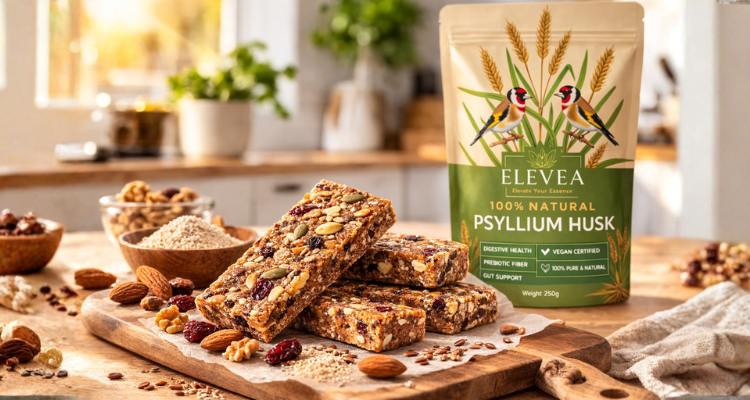
10. Psyllium Husk High-Fibre Energy Bars
Energy bars are widely enjoyed as a convenient snack before workouts or during busy days. Psyllium husk powder works as a natural binder that helps hold the ingredients together while increasing fibre. These bars are simple to prepare without baking and can be customised with chocolate, berries, or nuts depending on your preference.
Ingredients
- ½ cup mixed nuts
- 2 tsp psyllium husk powder
- ¼ cup protein powder
- 2 tbsp coconut oil
- ¼ cup berries or cocoa
Method
- Chop nuts roughly in a food processor.
- Add psyllium powder and protein powder.
- Mix in melted coconut oil and berries or cocoa.
- Press mixture into a lined tray.
- Chill 1 hour before slicing.
How Much Psyllium Husk Powder Should You Use Daily?
A moderate daily amount of psyllium husk powder is usually enough to support fibre intake without overwhelming your digestive system. Many people start with a small quantity and increase it gradually as their body adjusts to the added fibre. Because psyllium absorbs liquid, staying well hydrated throughout the day is important. Drinking enough water helps the fibre work smoothly and comfortably. Another helpful approach is adding it to everyday meals so it becomes part of a routine. Many people include it in simple psyllium husk recipes such as smoothies, porridges, or snacks. You’ll also find practical recipes for psyllium husk powder that make regular use easy and convenient.
Tips for Cooking with Psyllium Husk Powder
Many home cooks enjoy psyllium husk powder recipes because they are simple to prepare and can add extra fibre to everyday meals.
1. Start With Small Amounts
When trying psyllium for the first time, begin with a small quantity in your dishes. Because it absorbs liquid quickly, even a teaspoon can make a noticeable difference in texture when preparing recipes with psyllium husk powder.
2. Mix Thoroughly With Liquids
Psyllium husk powder should always be mixed well with liquids like milk, water, or Yoghurt. Stirring thoroughly helps prevent clumps and ensures the ingredient spreads evenly through smoothies, porridges, or batters.
3. Allow Time for Thickening
After mixing psyllium into food, give it a few minutes to thicken. Its natural gel-forming property gradually changes the texture, which is why it works so well in drinks, breakfast bowls, and baked goods.
4. Stay Hydrated When Consuming Psyllium
Because psyllium absorbs liquid, it’s important to drink enough water when including it in meals. Staying hydrated helps the fibre work comfortably in the digestive system and supports regular digestion.
5. Use It in Gluten-Free and Fibre-Rich Baking
Psyllium is especially helpful in gluten-free baking because it helps hold ingredients together. Many people include it in breads, pancakes, or other baked recipes to improve structure while increasing fibre content.
How to Store ELEVEA Psyllium Husk Powder
Proper storage helps maintain the freshness and effectiveness of Elevea psyllium husk powder, especially when you regularly prepare simple psyllium husk powder recipes at home.
- Store in an airtight container: Keep psyllium husk powder in a tightly sealed container after opening. This helps protect it from air exposure and maintains its texture and quality for longer use.
- Keep in a cool, dry place: Place the container in a cupboard or pantry away from direct sunlight or heat. Stable temperatures help keep the powder fresh and prevent changes in consistency.
- Avoid moisture exposure: Always use a dry spoon when handling psyllium husk powder. Moisture can cause clumping and reduce its quality, making it harder to mix smoothly into foods.
- Check the expiry date regularly: Look at the expiry date printed on the package before using the powder. Fresh psyllium husk works better in recipes and keeps flavour and texture consistent.
ELEVEA Psyllium Husk Powder Recipe Ideas for Fibre-Rich Meals
Many people include psyllium husk powder in everyday meals because it blends easily into fibre-rich dishes and supports simple, balanced eating habits.
Supports Digestive Wellness
Adding ELEVEA psyllium husk to meals can support digestive wellness by increasing fibre intake naturally. Many people prepare simple psyllium husk powder recipes, such as smoothies, oats, or Yoghurt bowls, to help maintain regular digestion.
Helps Support Gut Health
Psyllium contains soluble fibre that helps maintain gut balance when included regularly in meals. That’s why many recipes with psyllium husk powder appear in breakfasts, drinks, and snacks designed for daily fibre intake.
Supports Weight Management
Fibre helps meals feel more filling, which can support steady eating habits throughout the day. Many psyllium husk recipes include smoothies, breakfast bowls, or snacks that help maintain satisfying portion sizes.
Conclusion
Adding more fibre to everyday meals doesn’t have to feel complicated. As we’ve seen, simple ingredients like psyllium husk can easily be mixed into breakfasts, drinks, snacks, and even baked dishes. From smoothies and oats to breads and pancakes, these psyllium husk powder recipes show how versatile this ingredient can be. Trying even one psyllium husk powder recipe regularly can help build better eating habits while supporting digestion and keeping meals more satisfying. Many people also enjoy experimenting with different recipes for psyllium husk powder to keep their meals interesting. When choosing quality ingredients, recipes for psyllium husk powder from ELEVEA can make daily cooking easier. Just remember to use it consistently but in moderate amounts. Ready to make healthy meals more satisfying? Start exploring these psyllium husk powder recipes with ELEVEA today and bring fibre-rich goodness to your kitchen!
Frequently Asked Questions
1. What is psyllium husk powder used for in recipes?
Psyllium husk powder is commonly used to increase fibre in meals and improve texture in cooking. It can be added to smoothies, oats, Yoghurt bowls, breads, and snacks to make meals more filling and fibre-rich.
2. Can psyllium husk powder be added to drinks?
Yes, psyllium husk powder mixes well with liquids such as water, smoothies, or milk-based drinks. It thickens slightly when mixed with liquid, which is why many people include it in quick breakfast drinks.
3. How much psyllium husk powder should beginners start with?
Most people begin with a small amount and gradually increase it over time. Starting with a teaspoon in meals or drinks is common when preparing simple psyllium husk powder recipes at home.
4. Does psyllium husk powder change the taste of food?
Psyllium husk powder has a mild flavour, so it usually doesn’t affect the taste of meals. Instead, it slightly thickens the texture of foods like porridge, smoothies, and baked items.
5. Can psyllium husk powder be used in baking?
Yes, psyllium husk powder works well in baking because it helps bind ingredients together. Many gluten-free breads, pancakes, and other baked goods rely on it for better structure.
6. What foods pair well with psyllium husk powder?
Psyllium husk powder blends well with oats, yoghurts, smoothies, pancakes, breads, and snack bars. It can easily become part of everyday psyllium husk recipes without changing your usual meals.
7. Are there easy recipes for psyllium husk powder for beginners?
Yes, beginners often start with simple meals like smoothies, Yoghurt bowls, or porridge. These recipes for psyllium husk powder require only a few ingredients and are quick to prepare.
8. Is ELEVEA psyllium husk powder suitable for everyday cooking?
ELEVEA psyllium husk powder is designed to blend easily into daily meals such as smoothies, breakfast bowls, breads, and other simple dishes that support a fibre-rich routine.
9. Why do many recipes include psyllium husk powder?
Many recipes with psyllium husk powder include it because it increases fibre and improves texture in foods like breads, pancakes, and smoothies while helping meals feel more satisfying.
10. What makes ELEVEA psyllium husk powder a good choice?
ELEVEA focuses on clean ingredients and consistent quality, making it suitable for adding to drinks, breakfasts, baked foods, and other everyday meals where fibre is needed.